
Industries · Rendering & Animal Proteins
Odor scrubbers for rendering and animal proteins
Amines, mercaptans, hydrogen sulphide, ammonia and butyric acid from offal, slaughter and feed production. Our scrubbers in this sector treat up to 23,000 Nm³/h.
- Oxidative washing with NaOCl, dosed on pH and free chlorine
- AISI 316L housings
- Siemens S7-1500 PLC control
From our projects
Processes and emissions from our projects
From the project matrix of our completed installations.
| Process | Emissions | Process analysers |
|---|---|---|
| Slaughterhouse | Allyl mercaptan, Ammonia, Amyl mercaptan, Benzyl mercaptan, Butylamine, Crotyl mercaptan, Dibutyl amine, Diisopropylamino, Dimethyl sulfide, Dimethylamine, Diphenyl sulfide, Ethyl mercaptan, Ethylamine, Hydrogen sulphide, Methyl mercaptan, Methylamine, Propyl mercaptan, Triethylamine | FID, FTIR, UV-VIS |
| Offal processing | Amines, Amino acids, Ammonia, Butylamine, Dimethyl sulfide, Diphenyl sulfide, Ethylamine, Hydrogen sulphide, Mercaptanes, Triethylamine | CEMS, FTIR |
| Vegetables processing | 2-butanone, Dimethyl disulfide, Dimethyl sulfide, Ethyl acetate, Volatile organic compounds | FTIR |
References
Installations we built in this sector
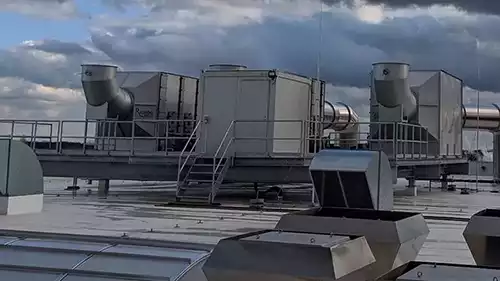
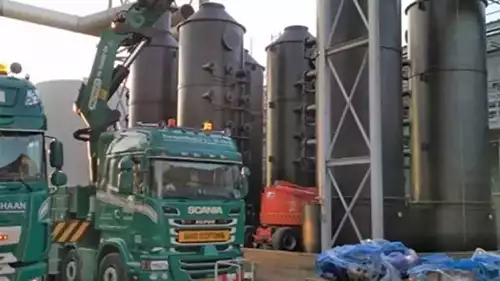
From a quench at an offal plant to a slaughterhouse scrubber of some 40 tonnes.
Odor scrubber for offal processing
- Gas flow
- 23,000 Nm³/h
- Design
- Open-spray quench, AISI 316L
- Removes
- Odor from offal processing, PP droplet separator housing
Odor scrubber for slaughterhouses
- Design
- Cross-flow, three sections
- Material
- AISI 316L
- Removes
- Odor: two oxidative NaOCl sections, then NaOH
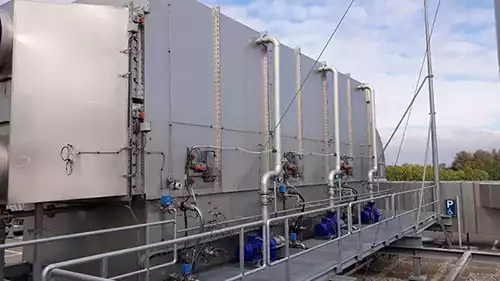
Odor scrubber for drying ovens (food to feed)
- Design
- Three identical sections
- Material
- AISI 316L
- Removes
- Odor from drying ovens, counter-current open spray
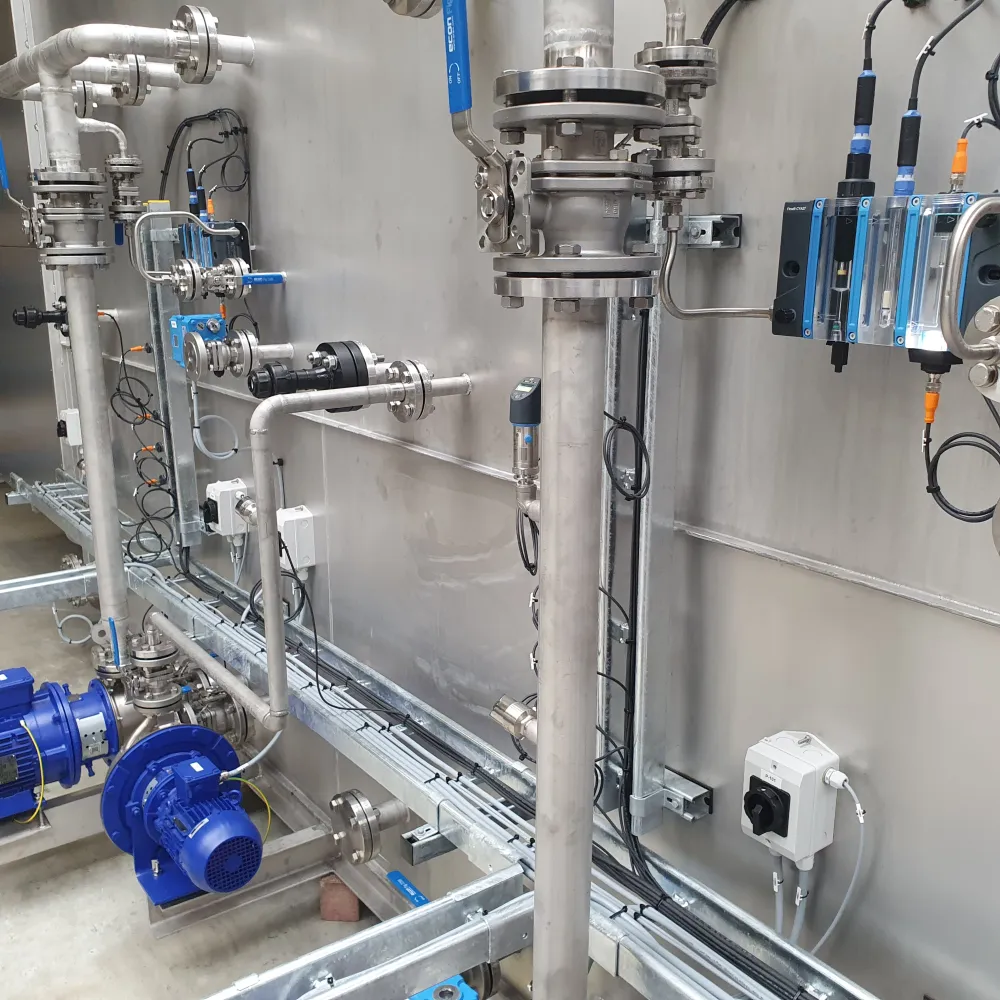
Scrubber for butyric acid removal
- Gas flow
- 12,000–20,000 Am³/h
- Material
- AISI 316L
- Removes
- Butyric acid, butyrate dust and odor at an animal feed producer
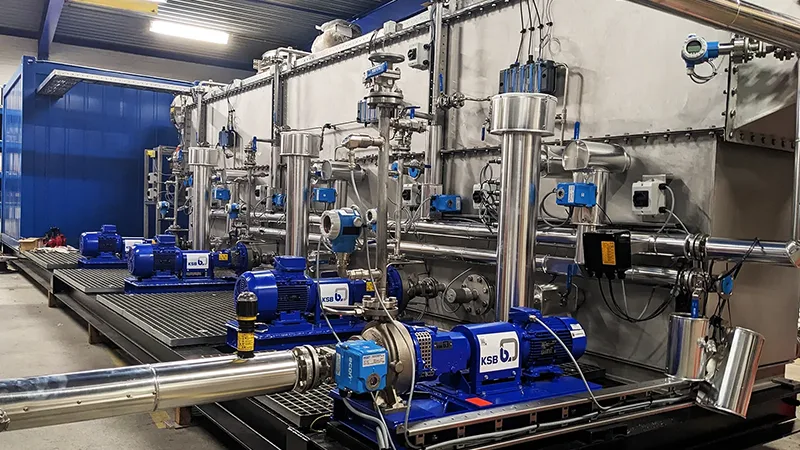
Gas scrubber for biodigesters
- Process
- Manure digestion
- Design
- Scrubbers in sequence
- Removes
- Odor; NH₃, H₂S and DMS expected in the gas
How we build
How we treat odor from animal by-products
The choices below come straight from the installations above.
Oxidative and alkaline stages
Two oxidative sections with sodium hypochlorite, corrected with sulfuric acid, followed by a caustic soda section that neutralises acid components and residual free chlorine.
Dosing on pH and free chlorine
Chemicals are dosed automatically in the integrated buffer tank, based on pH and free chlorine measurement.
Quench first
At the offal plant, a stainless-steel open-spray quench with its own buffer treats 23,000 Nm³/h before the droplet separator.
Built for maintenance
Removable spray pipes and an accessible droplet separator housing keep downtime short.
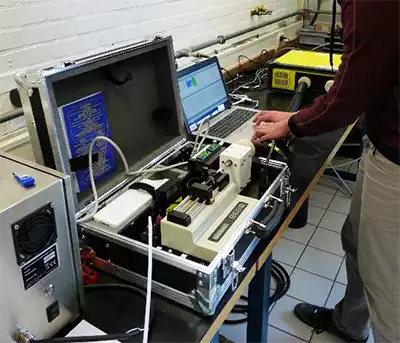
Measure and verify
Analysers that control the scrubber
Process analysers can control the installation and show what leaves the stack. In this sector our project matrix lists FTIR, FID and UV-VIS analysers and CEMS. Our own service engineers maintain and calibrate them.
FAQ
Questions from rendering and feed plants
Which odor components do you deal with?
In our offal, slaughterhouse and vegetable projects: ammonia, amines, mercaptans, hydrogen sulphide, dimethyl sulphide and other sulphur compounds. At an animal feed producer also butyric acid.
How does the scrubber remove odor?
Oxidative sections with sodium hypochlorite, corrected with sulfuric acid, oxidise the odor-forming components. A caustic soda section then neutralises acid components and residual free chlorine.
Is the chemical dosing automatic?
Yes. Dosing is based on pH and free chlorine in the integrated buffer tank, controlled by a Siemens S7-1500 PLC.
Can odor be measured?
The design of our butyric acid scrubber was based on measured odor concentrations, on average 15,150 OUE/m³. For gas components we use analysers such as FTIR.
Which gas flows can you handle?
From 12,000 to 20,000 Am³/h for the butyric acid scrubber, and 23,000 Nm³/h at the offal plant. See the references.
What information do you need for a proposal?
Your process, the pollutants and their concentrations, the gas flow and temperature, and the emission limit you have to meet. Send what you have, and we will go through the rest with you. Contact us.