
Industries · Surface Treatment
Scrubbers for pickling, anodizing and plating baths
Acid fumes and bath vapors from pickling, anodizing, nickel and chromic acid baths. We build two-stage scrubbers in polypropylene.
- Two stages: caustic soda, then fresh water
- Polypropylene with integrated buffer tanks
- Rectifier for a laminar gas flow
From our projects
Processes and emissions from our surface treatment projects
From the project matrix of our completed installations, including metal processing and a pickling line.
| Process | Emissions | Process analysers |
|---|---|---|
| Acidious baths | Chromic acid vapors | — |
| Precision parts | Aceton | FID |
| Treatment processing | Alcohols, Alkanes, Benzene, Carbonate salts, Organic acids (e.g. acetic acid) | FTIR |
| Cold mill pickling | Hydrochloric acid | NDIR, pH sensor |
References
Surface treatment installations we built
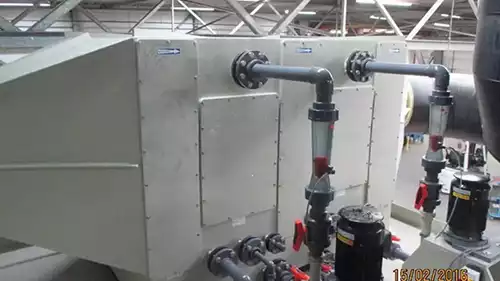
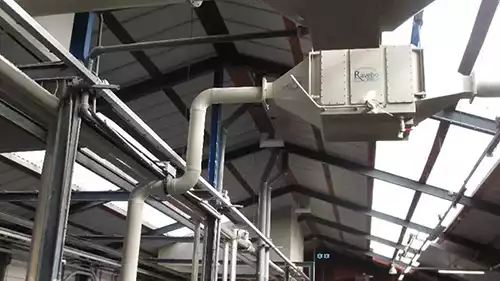
Two horizontal PP scrubbers for bath extraction.
How we build
How we build for surface treatment
The choices below come straight from the installations above.
Two washing stages
First a stage with caustic soda, then a second stage with fresh water, each with its own buffer.
Laminar flow first
The gas enters through a rectifier for a laminar flow before the spray stages.
Intermediate droplet separator
Between the stages an intermediate separator takes out the first droplets.
Polypropylene construction
Both horizontal scrubbers are built in PP with integrated buffer tanks.
Measure and verify
Analysers that control the scrubber
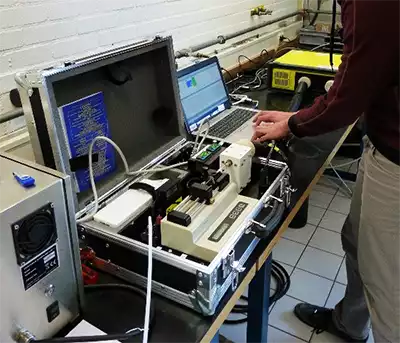
Process analysers can control the installation and show what leaves the stack. For a cold mill pickling line we used NDIR and a pH sensor; for metal treatment FID and FTIR. Our own service engineers maintain and calibrate them.
FAQ
Questions about surface treatment
Which baths can you extract and clean?
In our projects: pickling and anodizing baths, nickel baths and baths with chromic acid vapors.
How many washing stages do you use?
Two: a first stage with caustic soda and a second stage with fresh water, each with its own buffer tank.
Which material are the scrubbers built in?
Our surface treatment scrubbers are built in polypropylene, with integrated buffer tanks.
Do you also measure the emissions?
Yes. For a cold mill pickling line we used NDIR and a pH sensor, and for metal treatment FID and FTIR analysers.
Where can I read more about electroplating emissions?
On our solution page about gas scrubbers for electroplating and surface treatment. Electroplating and surface treatment.
What information do you need for a proposal?
Your process, the pollutants and their concentrations, the gas flow and temperature, and the emission limit you have to meet. Send what you have, and we will go through the rest with you. Contact us.