
Industries · Steel Industry
Wet gas scrubbers for the steel industry
Hydrochloric acid from pickling lines, SO₂ from coking plants and dust from continuous casting: from our steel projects.
- Open spray in all our steel projects
- PP, HDPE or AISI 316L, per process
- FTIR, NDIR, pH and dust measurement
From our projects
Processes and emissions from our steel projects
From the project matrix of our completed installations, including a foundry.
| Process | Emissions | Process analysers |
|---|---|---|
| Molding | Fluoranthene, Naphtalene | FTIR |
| Pyrolysis | Ammonia, Sulphur dioxide, Sulphur trioxide, Sulphuric acid | FTIR |
| Cold mill pickling | Hydrochloric acid | NDIR, pH sensor |
| Coking plant | Sulphur oxide | FTIR, NDIR |
| Continuous casting machine factory | Particulate | Optical method, Triboelectric |
Related references
Related references
Our steel projects are listed in the project matrix. These documented installations treat similar gas streams: HCl, pickling fumes, dust and pyrolysis gas.
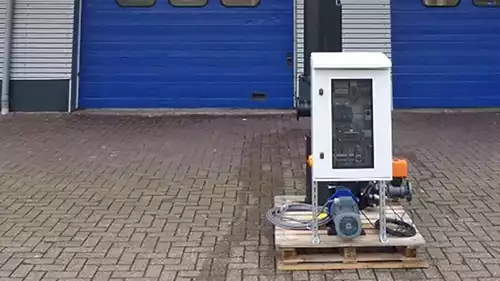
Scrubber for hydrochloric acid vapor recovery
- Gas flow
- 80–320 Nm³/h
- Design
- Packed column, Pall rings
- Removes
- HCl vapor, closed-loop washing
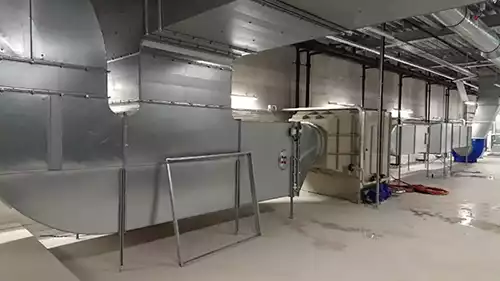
Scrubber for pickling baths
- Design
- Horizontal, two stages
- Material
- PP
- Removes
- Fumes from pickling and anodizing: NaOH stage, then fresh water
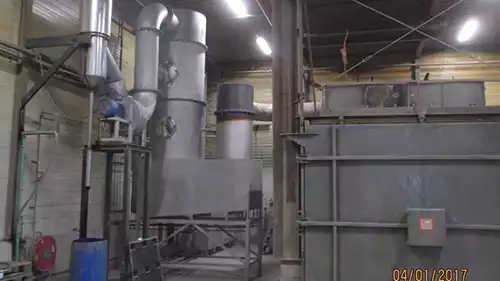
Scrubber for removing fine dust
- Design
- Horizontal open wash
- Material
- PP
- Removes
- Fine dust, with water in a closed loop
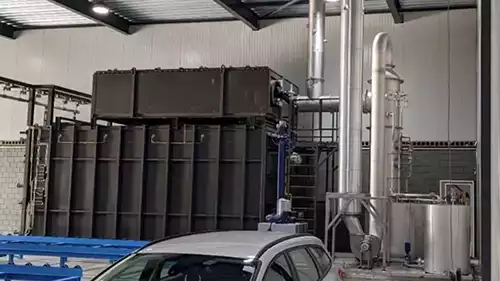
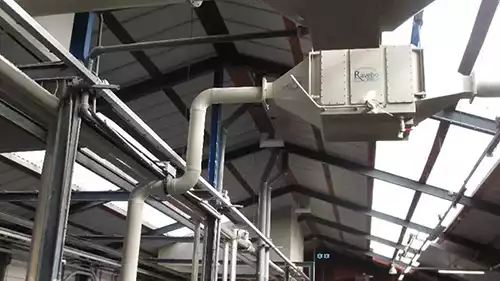
Scrubber for gas cleaning of pyrolysis ovens
- Gas flow
- 3,000–4,500 Nm³/h
- Material
- AISI 316L
- Removes
- Pyrolysis gas: alkaline-oxidative washing with NaOH and NaOCl
How we build
How we build for steel plants
Based on the steel projects in our project matrix.
Open spray
All four steel projects in our project matrix use open spray scrubbers, three of them horizontal counter-current.
Material per process
PP for the HCl pickling line, HDPE for the coking plant, AISI 316L for dust and pyrolysis gas.
Measured on site
NDIR and pH for pickling, FTIR and NDIR for SO₂, and optical and triboelectric measurement for casting dust.
Quench for hot gas
A quench in front of the scrubber cools hot gas, so the scrubber itself can be made of plastic.
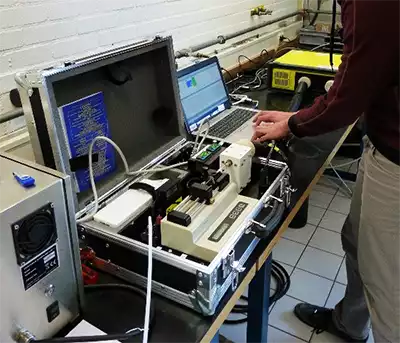
Measure and verify
Analysers that control the scrubber
Process analysers can control the installation and show what leaves the stack. In our steel projects we used FTIR and NDIR analysers, pH sensors, and optical and triboelectric dust measurement. Our own service engineers maintain and calibrate them.
FAQ
Questions from steel plants
Which steel processes have you equipped?
A cold mill pickling line (HCl), a coking plant (SO₂), a continuous casting machine factory (dust) and a pyrolysis process (NH₃, SO₂, SO₃, H₂SO₄). Our project matrix also lists a foundry.
Open spray or packed column?
All four steel projects in our project matrix use open spray scrubbers.
Which materials do you use?
PP for the pickling line, HDPE for the coking plant, and AISI 316L for casting dust and pyrolysis gas.
How is the dust measured?
At the continuous casting factory with optical and triboelectric measurement.
Can you treat HCl from pickling?
Yes. Our cold mill pickling scrubber is built in PP with NDIR and a pH sensor, and our HCl vapor recovery scrubber is a further reference. See the references.
What information do you need for a proposal?
Your process, the pollutants and their concentrations, the gas flow and temperature, and the emission limit you have to meet. Send what you have, and we will go through the rest with you. Contact us.