
Process Technology · Green Energy
Pyrolysis, torrefaction and gasification plants for biochar and biocarbon are moving from pilot to industrial scale. How the process gas is cleaned decides the permit, the uptime and the value of every by-product.
This autumn the biochar and biocarbon sector meets twice. The North American Biochar Conference in New Orleans (16 to 18 November) puts standards, scale and adoption on the agenda. The European Biocarbon & Biomass Summit in Amsterdam (8 and 9 December) brings steel, aluminium and graphite producers together with biocarbon suppliers, gasification specialists and developers of sustainable aviation fuel and biomethanol. Both programmes are about the solid carbon. Every tonne of that carbon also comes with a gas stream.
Whether the product is biochar for soil and construction, black pellets for co-firing or biocarbon for a furnace, thermal conversion of biomass releases pyrolysis gas or syngas loaded with tar, dust, ammonia, sulphur and chlorine compounds. At pilot scale that gas is often simply flared. At industrial scale it becomes an energy source, a feedstock for synthesis and an emission point that the permitting authority looks at closely. This article explains what is in that gas, why it matters more as plants grow, and how multi-stage wet scrubbing makes it usable and compliant.
01 From pilot plant to industrial plant
Biochar is no longer only a soil improver. Steelmakers and ferroalloy producers are replacing part of their fossil coke and coal with it. Aluminium and graphite producers see it as a renewable carbon source. Gasification routes turn biomass into syngas for aviation fuel, methanol and hydrogen. Demand is growing, and so is the size of the plants that supply it.
Scale changes the gas side of the process. A pilot reactor producing a few hundred kilograms per hour can send its off-gas to a flare. A plant producing tens of thousands of tonnes per year cannot afford to waste that energy, and it cannot afford an unexpected emission either. The process gas becomes a product stream in its own right.
The credibility of biochar and biocarbon depends on the whole process, including what happens to the gas. A plant that can show what enters its gas treatment and what leaves the stack builds exactly the trust the market is asking for.
02 Three routes, three gas streams
The conversion route determines the gas composition, and the end use of the gas determines how clean it has to be.
Pyrolysis for biochar and metallurgical biocarbon
Biomass is heated without oxygen. The pyrolysis gas carries condensable tars, fine char dust and organic acids, and is usually burnt to supply the process heat.
Torrefaction and black pellets
A milder thermal treatment that upgrades biomass into a dense, water-resistant fuel. The off-gas contains water vapour, acetic acid, other organic compounds and dust, and carries a strong odour.
Gasification for SAF, methanol and hydrogen
Biomass is converted at high temperature into a syngas of carbon monoxide and hydrogen. Engines and synthesis catalysts downstream tolerate very little tar, dust, ammonia, sulphur or chlorine.
03 What has to come out
Pyrolysis gas and syngas contain a wide range of contaminants. Each one causes a different problem, and each one calls for a different scrubbing approach.
| Contaminant | Why it matters | Scrubbing approach |
|---|---|---|
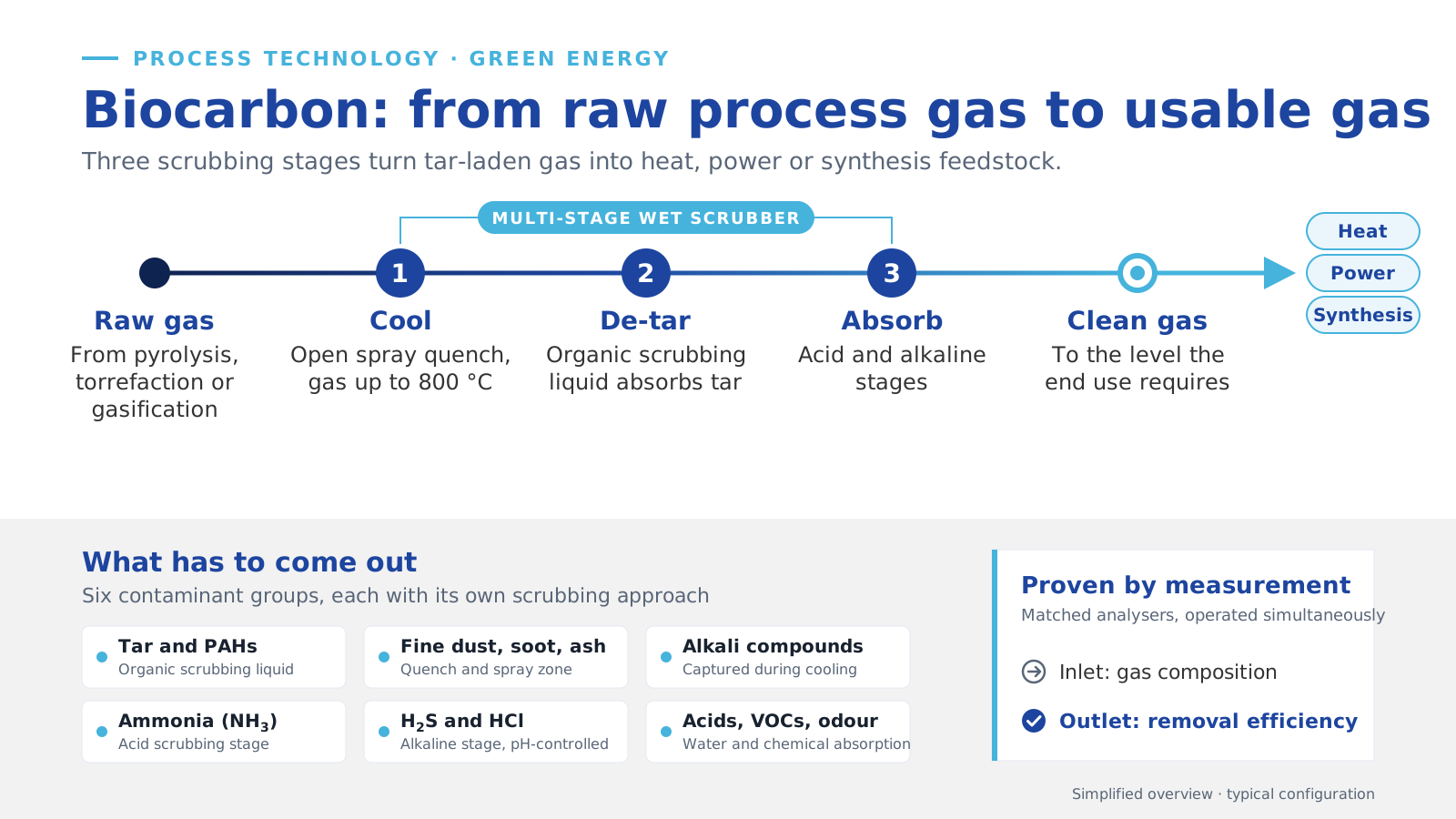
| Tar and heavy hydrocarbons | Condense as the gas cools and foul pipework, valves and heat exchangers; includes PAHs | Absorption in an organic scrubbing liquid such as rapeseed methyl ester (RME) |
| Fine dust, soot and ash | Erosion, deposits and particulate emissions | Quench and intensive droplet contact in the spray zone |
| Alkali compounds | Deposits and corrosion in hot equipment | Captured with the dust during cooling |
| Ammonia (NH₃) | Forms NOx on combustion and poisons synthesis catalysts | Acid scrubbing stage |
| H₂S and HCl | Corrosion and catalyst poisoning; when the gas is burnt, the sulphur leaves the stack as SO₂ | Alkaline scrubbing stage under pH control; the CO₂ in the gas also consumes caustic |
| Organic acids, VOCs and odour | Corrosion, emissions and odour nuisance for the neighbourhood | Water-based and chemical absorption |
04 How Lechler cleans pyrolysis gas and syngas
Lechler designs multi-stage wet scrubbers around the customer's gas composition and the intended end use of the gas. A typical configuration follows four steps.
Hot gas cooling and pre-cleaning
Gas at up to 800 °C enters an open spray quench. Cooling and the first removal of dust and alkali compounds take place in one step, before anything can condense on downstream equipment. More on hot gas cooling and cleaning.
Tar removal
Nozzles atomise an organic scrubbing liquid into ultrafine droplets that fall counter-current to the rising gas. Tars and PAHs are absorbed into the liquid instead of settling in pipes and valves.
Chemical absorption
Acid and alkaline stages, matched to the gas, remove ammonia, hydrogen sulphide and hydrogen chloride to the level the burner, engine or catalyst requires. Because the gas also contains carbon dioxide, which reacts with caustic as well, the alkaline stage runs under pH control and, where needed, with an oxidising agent that binds the absorbed sulphide.
Liquid management and droplet separation
The scrubbing liquid circulates in a closed loop. Vacuum belt filters and centrifugal separators remove solids and tar, automated water management keeps the chemistry stable, and droplet separators keep liquid out of the clean gas.
Open spray scrubbers suit this duty well. There is no packing in the gas path for tar and dust to block, the pressure drop stays low and maintenance is limited. For pilot and demonstration plants, the same technology is available in containerised form. A detailed description of the process is given in Pyrolysis Gas Cleaning: Multi-Stage Wet Scrubber Technology for Clean Syngas.
05 Trust is built on measurement
"Trust, Scale, Adoption" is the theme of this year's North American Biochar Conference. On the gas side, trust comes from data. Lechler combines scrubber engineering with analyser know-how, so the gas is measured before the scrubber is designed and after it has been built.
- Before design: an emission survey at the reactor outlet shows what the scrubber really has to remove. Heated sampling with FTIR analysis covers gaseous components such as ammonia, hydrogen chloride and organic acids; tar and hydrogen sulphide, which FTIR does not capture well, are measured separately. See Measuring an Unknown Emission.
- At commissioning: identical analysers at inlet and outlet, operated simultaneously, prove the guaranteed removal efficiency on site.
- In operation: the same analysers stay in place as continuous monitoring and feed the scrubber's own control loop. See Simultaneous Scrubber Testing with Analysers.
06 Design the gas side in from the start
Gas treatment as an afterthought
- Flared at pilot scale, redesigned at full scale
- Tar fouling causes unplanned shutdowns
- Emission data only from periodic measurements
- The energy content of the gas is lost
Gas cleaning designed with the reactor
- Gas composition measured before sizing
- Scrubber stages matched to route and end use
- Clean gas used for heat, power or synthesis
- Removal efficiency proven and monitored
The earlier the gas treatment is part of the plant design, the fewer surprises there are at permitting, at commissioning and in the first year of operation.
07 Attending the summit in Amsterdam? Let's meet.
Our engineering office in Brielle is a short drive from Amsterdam. If you are attending the European Biocarbon & Biomass Summit on 8 and 9 December, we are happy to meet before or after the summit, at our office or online, to discuss the gas side of your project. For those travelling to New Orleans in November, an online session works just as well.
Bring your gas composition, or the questions you still have about it. We will look at it together with you and outline which scrubbing stages your process needs. Contact our scrubber specialists.
Frequently asked questions
Why not simply flare the pyrolysis gas?
At pilot scale that is common. At industrial scale, flaring wastes a significant energy source and the flue gas still has to meet emission limits. Cleaned pyrolysis gas can supply the process heat for the reactor itself, or be used for power or as a synthesis feedstock.
Why an open spray scrubber instead of a packed column?
Tar and fine dust foul packing material quickly. An open spray scrubber has no packing in the gas path, so there is nothing to block. The pressure drop stays low and the scrubber keeps its performance between maintenance intervals.
Which scrubbing liquid removes tar?
Water on its own absorbs tar poorly. Lechler uses water combined with organic solvents such as rapeseed methyl ester (biodiesel), and sometimes alcohols, in a closed loop. Solids and tar are continuously removed from the liquid so it can be reused.
Can the scrubber take the gas directly from the reactor?
Yes. With a hot gas cooling stage in front, Lechler scrubbers handle syngas at inlet temperatures up to 800 °C.
Is syngas for SAF or methanol cleaned differently from gas that is burnt?
Yes. Synthesis catalysts require much lower residual levels of sulphur, chlorine, ammonia and tar than a burner. The wet scrubber then takes care of the bulk cleaning, upstream of any final polishing step specified by the catalyst supplier.
Where does a project start?
With the gas composition. If it is not yet known, an emission survey at the reactor outlet provides the basis for the scrubber design. From there, the stages, liquids and materials are chosen for your route and end use.
Further reading: Syngas purification · Pyrolysis: transforming waste · Scrubber system for high-temperature syngas cleaning · Biochar in the Netherlands
't Woud 59, 3232 LN Brielle, The Netherlands · +31 (0)181 419 419
Multi-stage wet scrubbers for pyrolysis gas and syngas, engineered around your gas composition and verified with matched analysers.